
Your kitchen storage defines daily efficiency. Poor shelving wastes time searching for items. Good shelving saves space and mental energy. Organization improves cooking flow. Shelving also impacts your kitchen’s visual appeal. The right solution works with your lifestyle. Kitchen shelving is an investment in both function and aesthetics.
Types of Kitchen Shelving Solutions
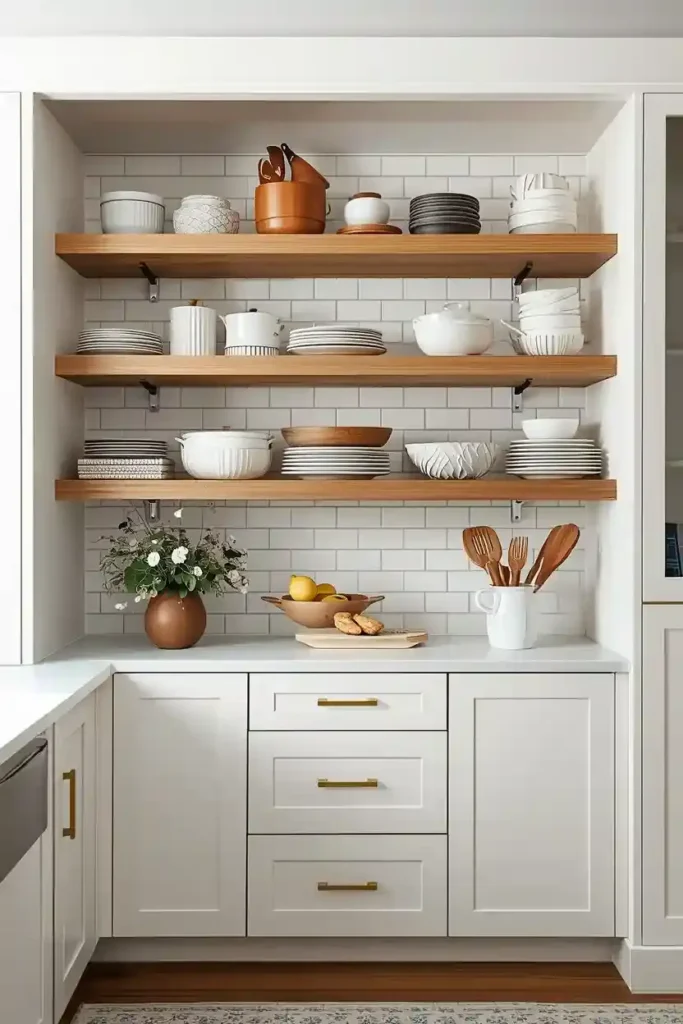
1. Floating Shelves with Hidden Brackets
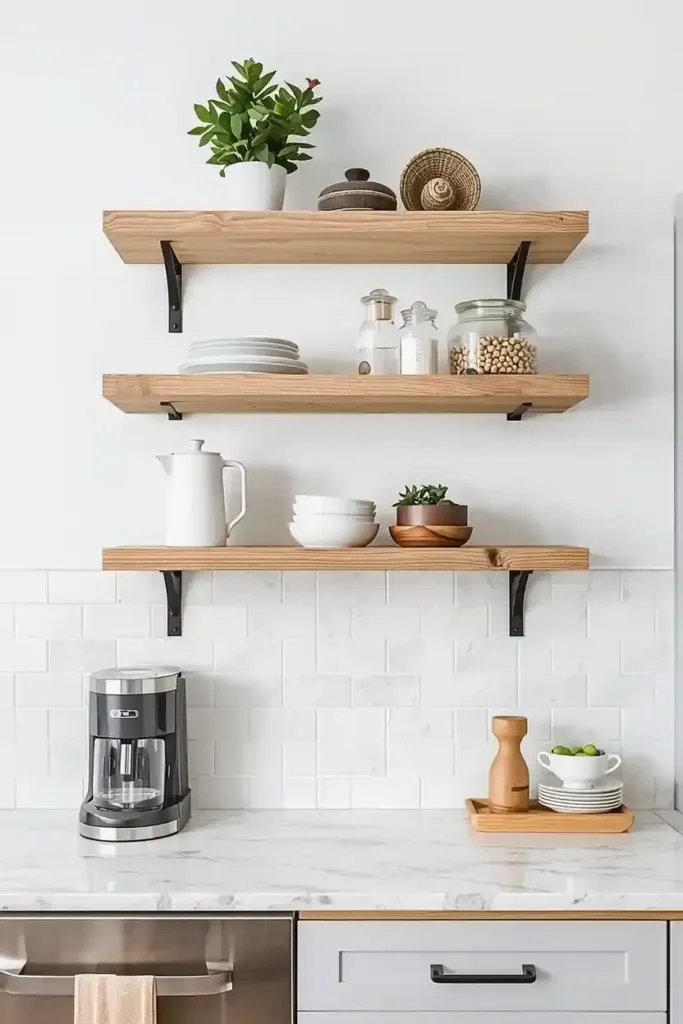
Floating shelves mount directly to walls. Hidden brackets sit behind the shelf. No visible support means clean lines. They work in small kitchens especially well. Weight capacity typically ranges 25-50 pounds per shelf. Professional installation ensures stability and safety.
Best uses:
- Display dishes and cookbooks.
- Lightweight storage above counters.
- Creating visual height in compact spaces.
- Contemporary and minimalist kitchens.
2. Open Shelving Without Backs
Open shelves with no backings maximize light. Kitchen feels larger and more breathable. You see everything at a glance. Daily-use items become instantly accessible. Dust settles faster on exposed shelves. Regular wiping keeps them clean. Plan weekly cleaning into your routine.
Ideal for:
- Modern and transitional kitchens.
- Displaying attractive dishware.
- Frequently accessed cooking tools.
- Kitchens with good natural light.
3. Corner Shelving Units
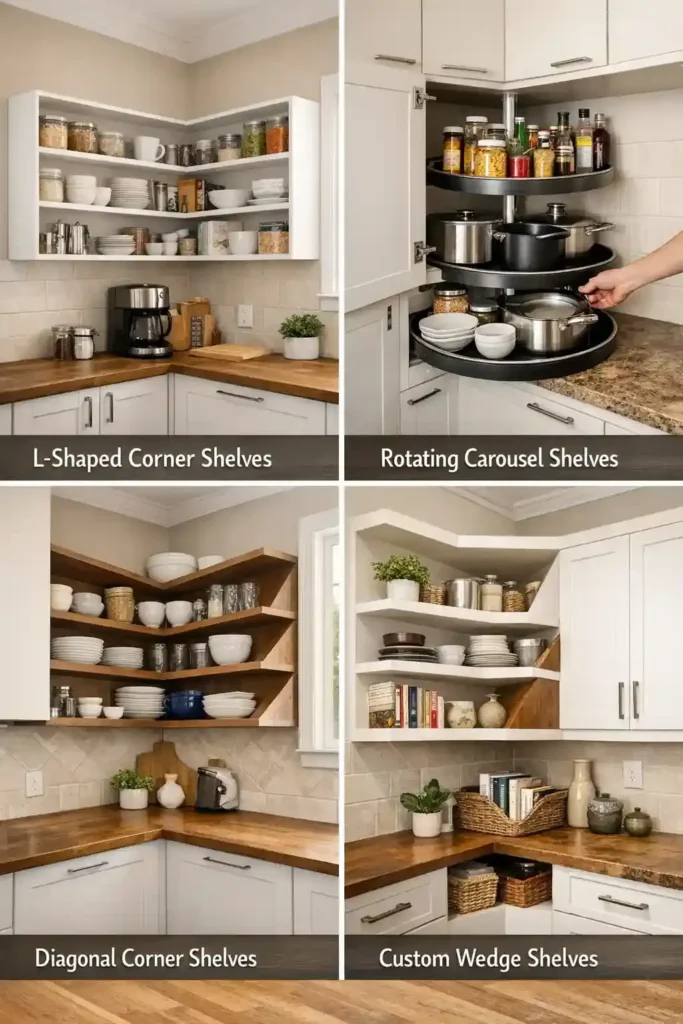
Corner space is often wasted. L-shaped shelving captures this area. Corner carousels rotate for access. Diagonal shelves maximize corner zones. Proper measurement prevents installation mistakes. Corner shelving adds 20-30% storage capacity. This works without reducing floor space.
Common corner options:
- L-shaped two-wall units.
- Rotating carousel systems.
- Tiered diagonal shelves.
- Custom wedge-shaped designs.
4. Stainless Steel Industrial Shelving
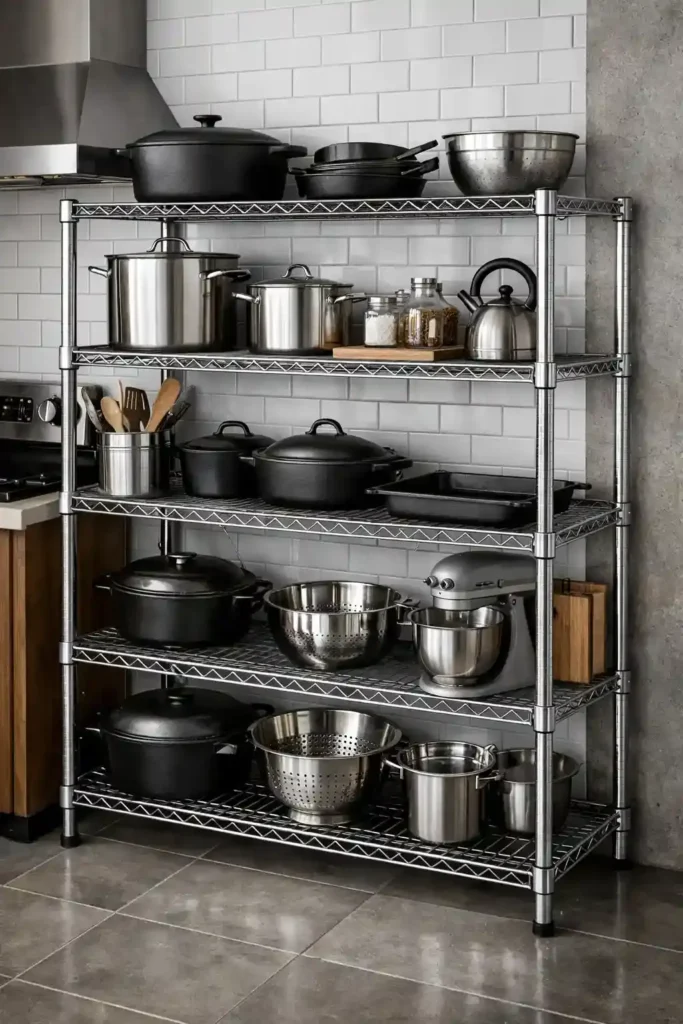
Metal shelving handles heavy cookware. Industrial style suits modern kitchens. Steel is durable and long-lasting. These units work in commercial or home settings. Weight capacity exceeds 200 pounds per shelf. Metal does show fingerprints easily. Wiping regularly maintains appearance.
Perfect for:
- Heavy cast iron and cookware storage.
- Warehouse and loft-style kitchens.
- Professional-looking organization.
- Kitchens that prioritize durability.
5. Reclaimed Wood Shelves
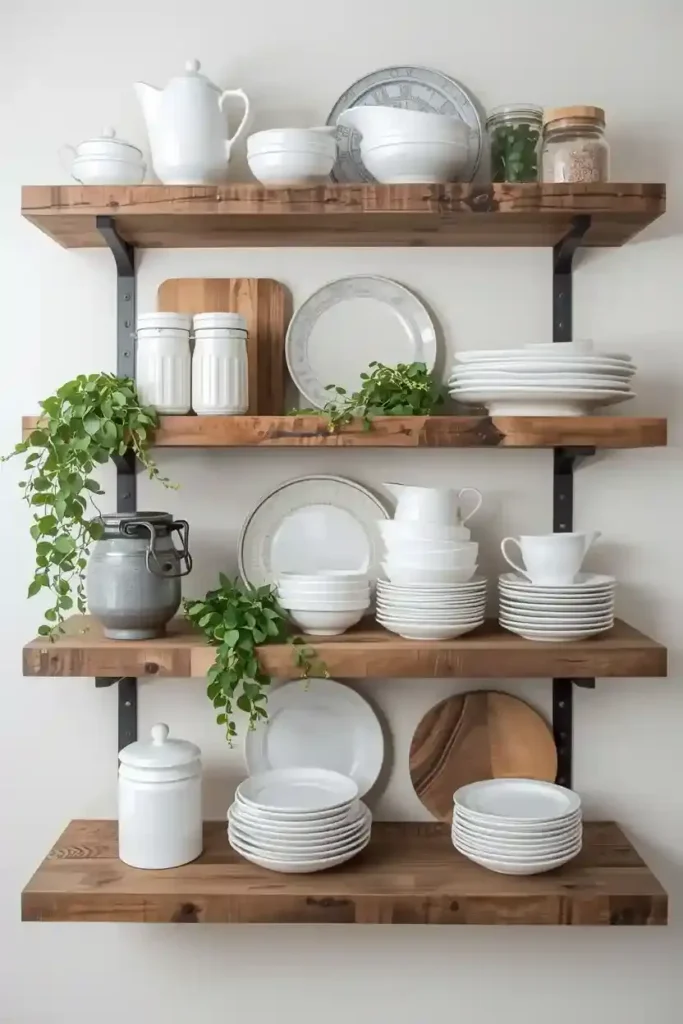
Salvaged wood adds warmth and character. Each shelf tells a history story. Reclaimed materials support sustainability goals. Wood requires sealing for food safety. Cost runs higher than new materials. The aesthetic appeal justifies the investment. These shelves work in farmhouse kitchens beautifully.
Best applications:
- Farmhouse and rustic kitchens.
- Displaying vintage dishware.
- Adding texture and warmth.
- Eco-conscious home design.
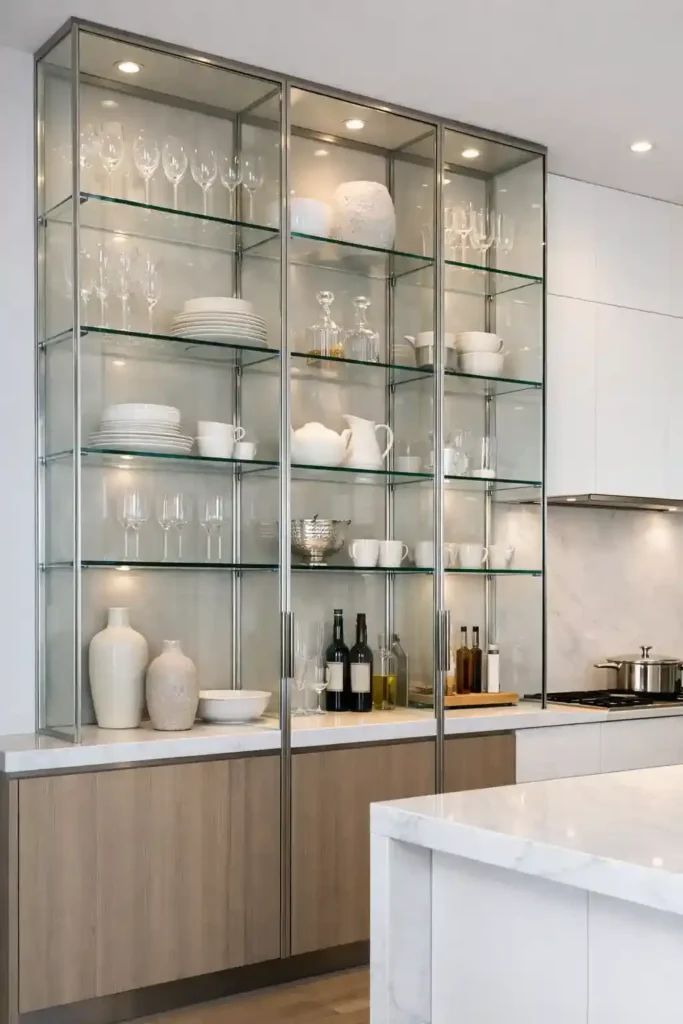
6. Glass Shelving Systems
Transparent glass maintains visual openness. Light passes through for brightness. Tempered glass prevents breakage safety risks. Display items look elegant behind glass. Fingerprints show easily on surfaces. Cleaning frequency increases with glass. Minimalist kitchens benefit most from this choice.
Suitable for:
- Contemporary and modern spaces.
- Showcasing fine dishware and collectibles.
- Small kitchens needing visual lightness.
- High-end kitchen designs.
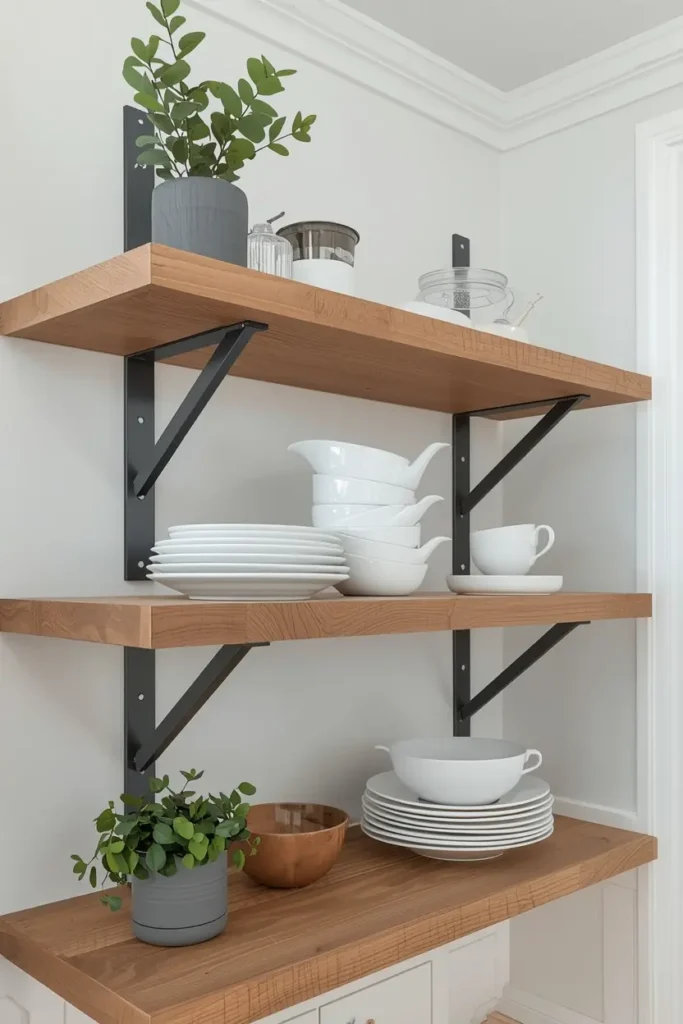
7. Bracketed Shelves with Hardware
Visible brackets become design elements. Different metals create distinct styles. Shelf material choices include wood or metal. Installation is straightforward and accessible. Brackets distribute weight effectively. Various bracket styles suit different décor. This is most traditional shelving option.
Works well in:
- Transitional kitchen designs.
- Spaces mixing old and new styles.
- Rustic and farmhouse kitchens.
- Budget-conscious renovations.
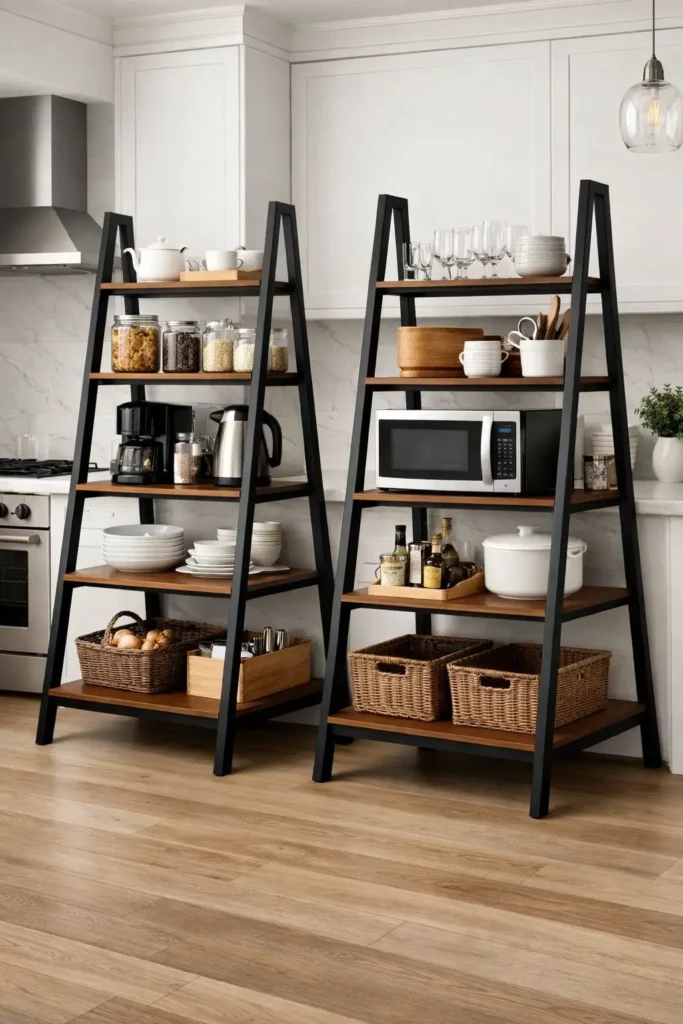
8. Ladder-Style Shelving Units
Ladder designs save square footage. These stand alone without wall mounting. Industrial and modern aesthetics dominate. Weight distribution spreads across a wider base. Stability exceeds wall-mounted versions. Moving these units is practical. Perfect for renters seeking flexibility.
Great for:
- Rental kitchen upgrades.
- Small kitchen additions.
- Statement-making vertical storage.
- Flexible and temporary solutions.
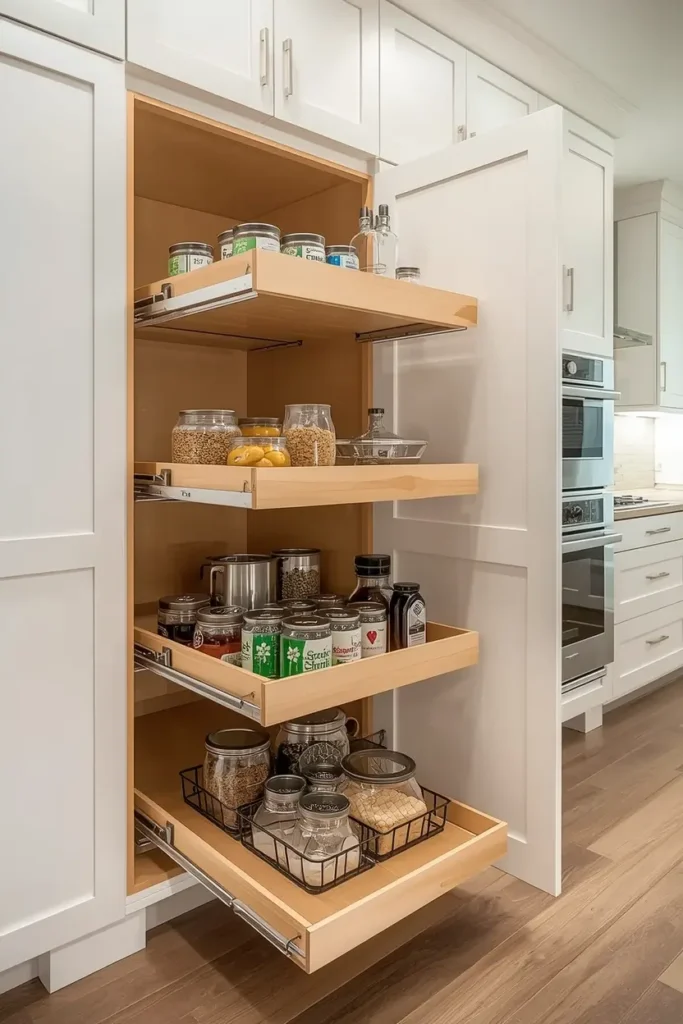
9. Pull-Out Sliding Shelves
Sliding mechanism brings back items forward. Deep cabinet space becomes fully accessible. These retrofit into existing cabinetry. Installation requires measurements and planning. Weight capacity varies by mechanism quality. Smooth operation depends on regular maintenance. This solves accessibility problems efficiently.
Beneficial for:
- Utilizing deep cabinet spaces.
- Accessibility for elderly or disabled users.
- Kitchens with limited reach.
- Maximizing hard-to-reach zones.
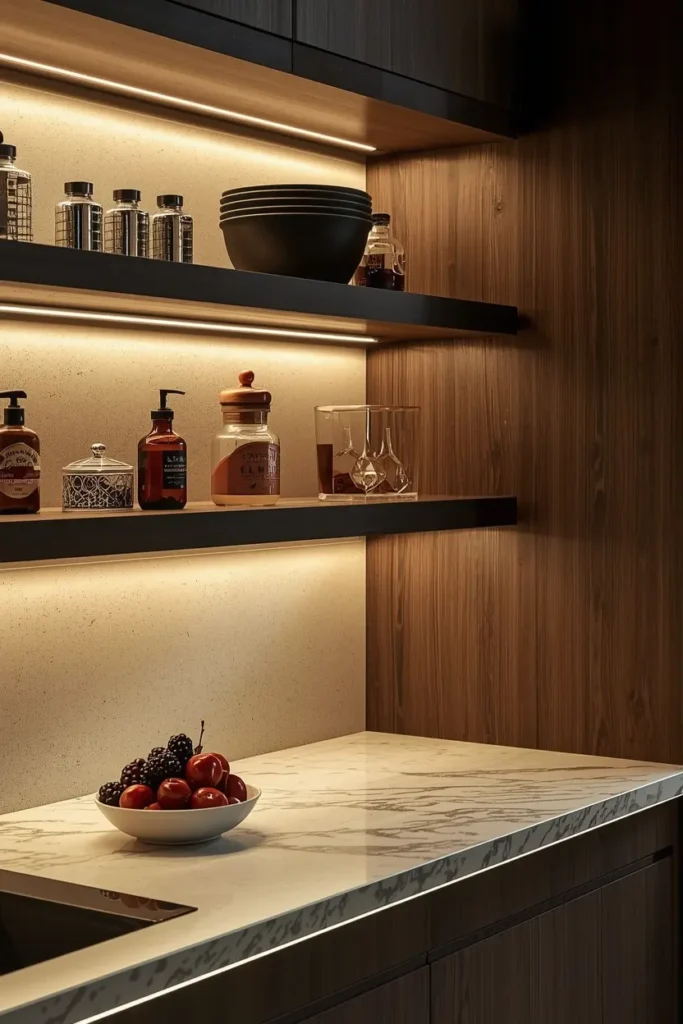
10. Under-Cabinet Lighting with Shelves
Shelves combined with LED lighting illuminate work areas. Task lighting improves food preparation visibility. Lights mount easily with adhesive strips. Energy-efficient LED reduces electricity usage. Bright whites enhance modern aesthetics. Warm tones suit traditional kitchens. Lighting transforms both function and appearance.
Advantages:
- Improved workspace visibility.
- Energy-efficient lighting solutions.
- Enhanced kitchen ambiance control.
- Highlight displayed items and décor.
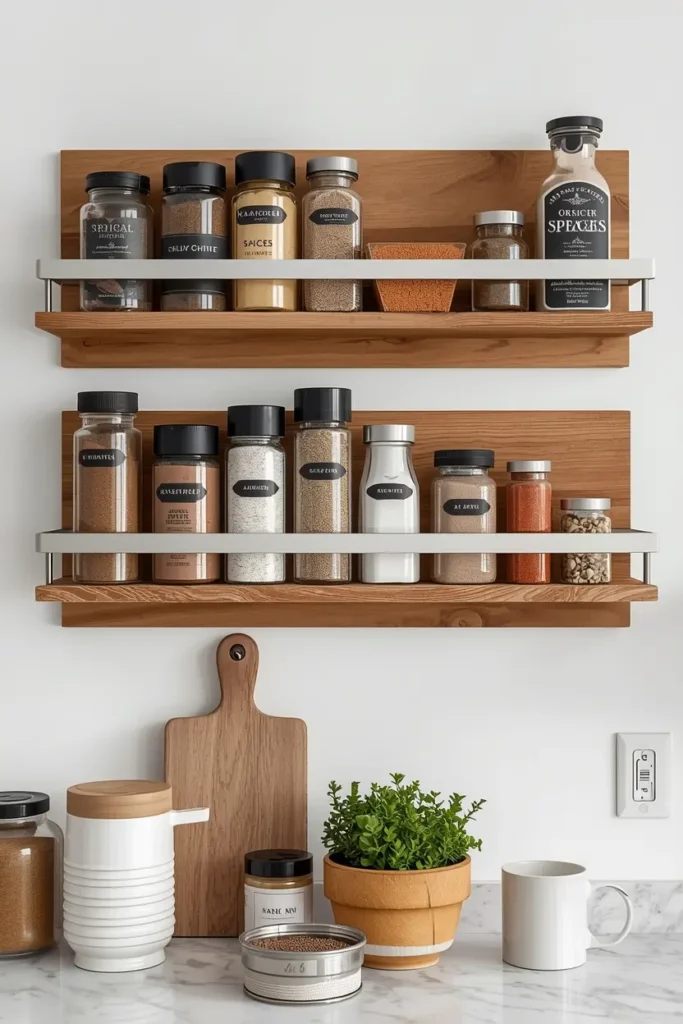
11.Wall-Mounted Magnetic Shelves
Magnetic strips hold metal containers. This saves cabinet space. Spices and supplies organize visibly. Containers slide on and off easily. Wood or metal backing supports magnets. Modern kitchens benefit from this system. Accessibility wins with this option.
Use cases:
- Spice organization and storage.
- Magnetic container systems.
- Minimalist kitchen solutions.
- Small apartment kitchens.
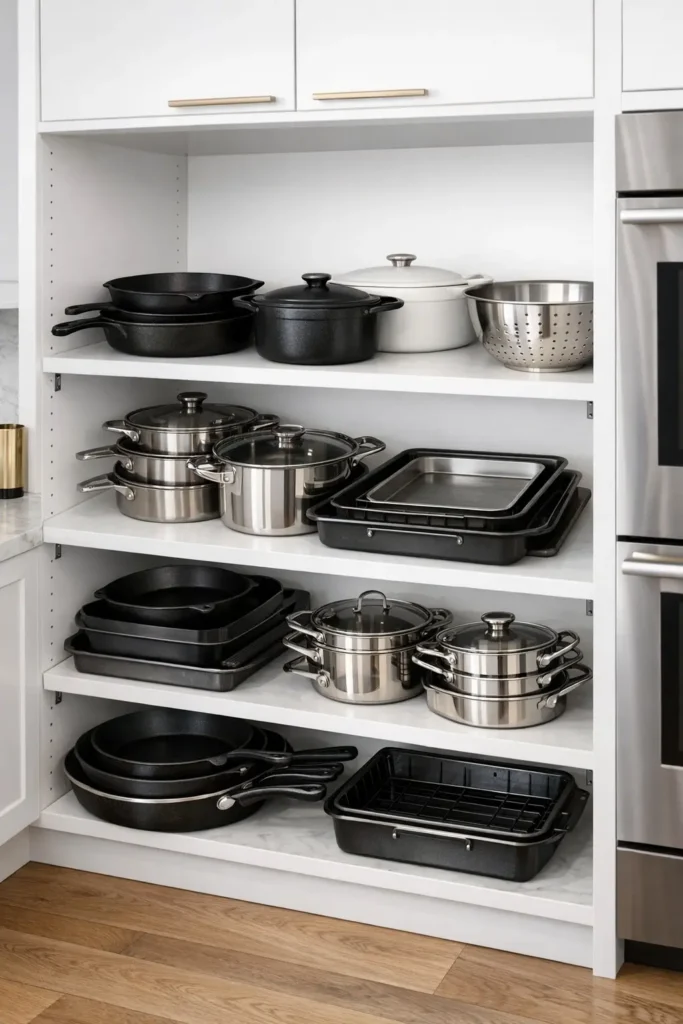
12. Deep Shelving for Pots and Pans
Deeper shelves accommodate large cookware. Standard 8-10 inch shelves feel limiting. 12-14 inch depth stores cookware flat. Access requires leaning slightly forward. Weight distribution becomes more important. Proper bracket support is critical. Plan this during renovation phases.
Critical for storing:
- Cast iron skillets and Dutch ovens.
- Large mixing bowls and colanders.
- Baking sheets and roasting pans.
- Multiple pots and pan sets.
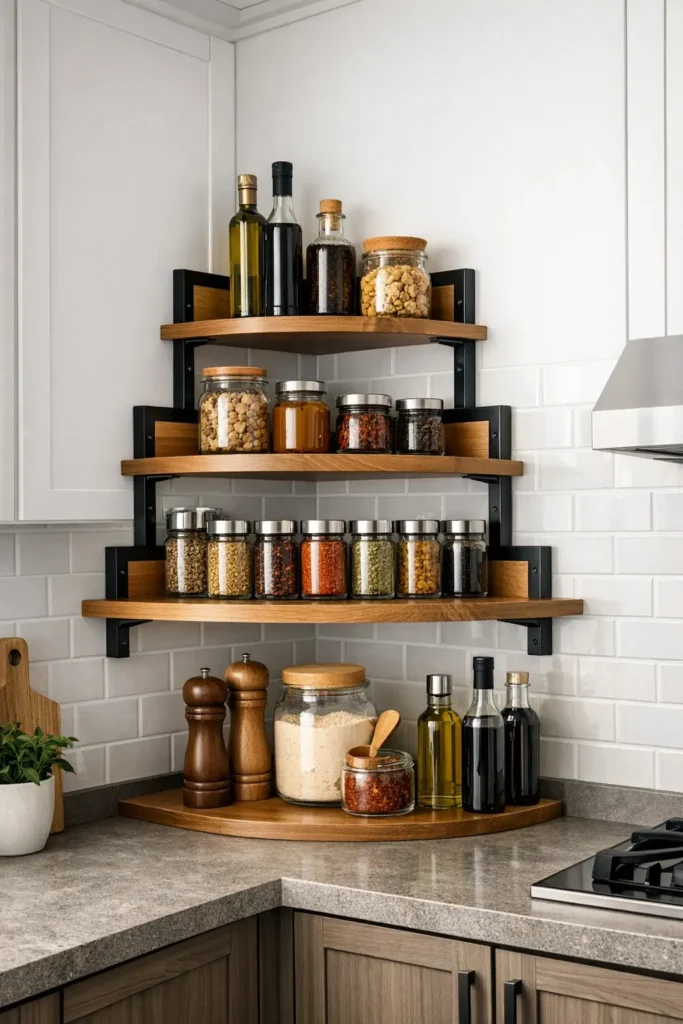
13. Tiered Corner Shelving
Tiered designs maximize vertical corners. Each level handles different heights. Organized appearance improves kitchen aesthetics. Accessibility improves with multiple levels. Installation complexity increases slightly. The visual impact justifies extra effort. This solution multiplies corner storage capacity.
Best for:
- Small bottle and jar storage.
- Stepping up item sizes.
- Creating visual interest.
- Organized spice collections.
14. Heavy-Duty Steel Angle Iron Shelves
Angle iron construction resists sagging. These handle weights 300+ pounds per shelf. Industrial appearance suits certain décor. Bolted assembly requires tools and knowledge. Permanence makes repositioning difficult. Long-term durability exceeds other options. Investment pays off over years.
Excellent for:
- Maximum weight capacity situations.
- Permanent kitchen installations.
- Commercial kitchen aesthetics.
- Long-term storage solutions.
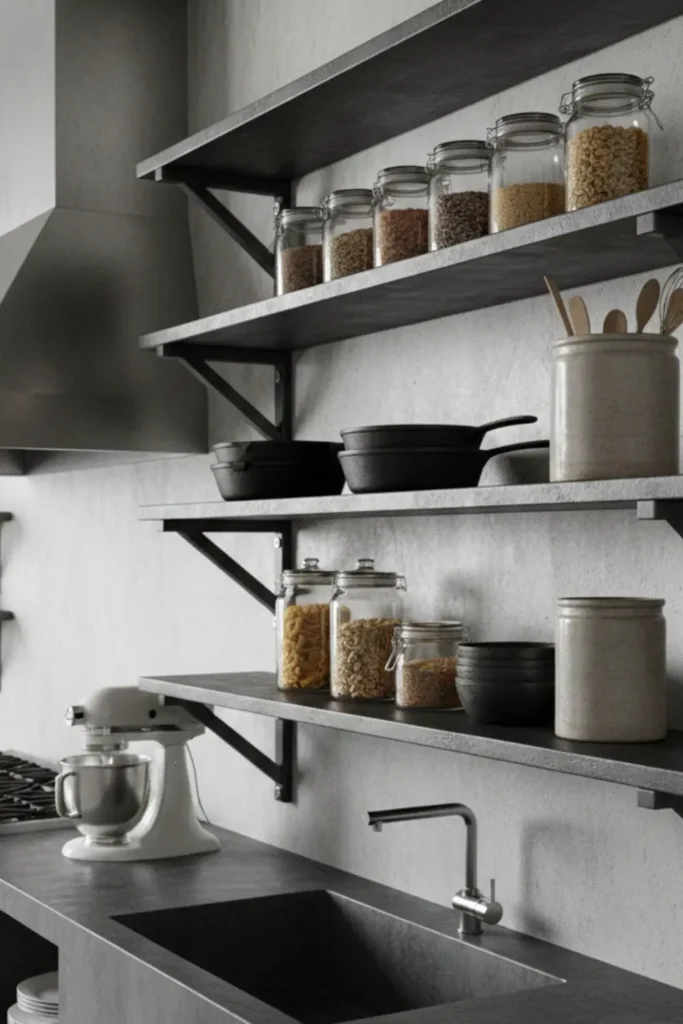
15. Adjustable Peg Board Shelving
Pegboards hold movable shelves. Adjust heights as storage needs change. This flexibility prevents future frustration. Wooden pegboards suit farmhouse styles. Metal pegboards work in industrial spaces. Installation requires wall studs or backing. This is most versatile shelving option available.
Adaptable for:
- Changing storage needs over time.
- Kitchens growing with families.
- Reorganizing storage annually.
- Displaying and storing tools.
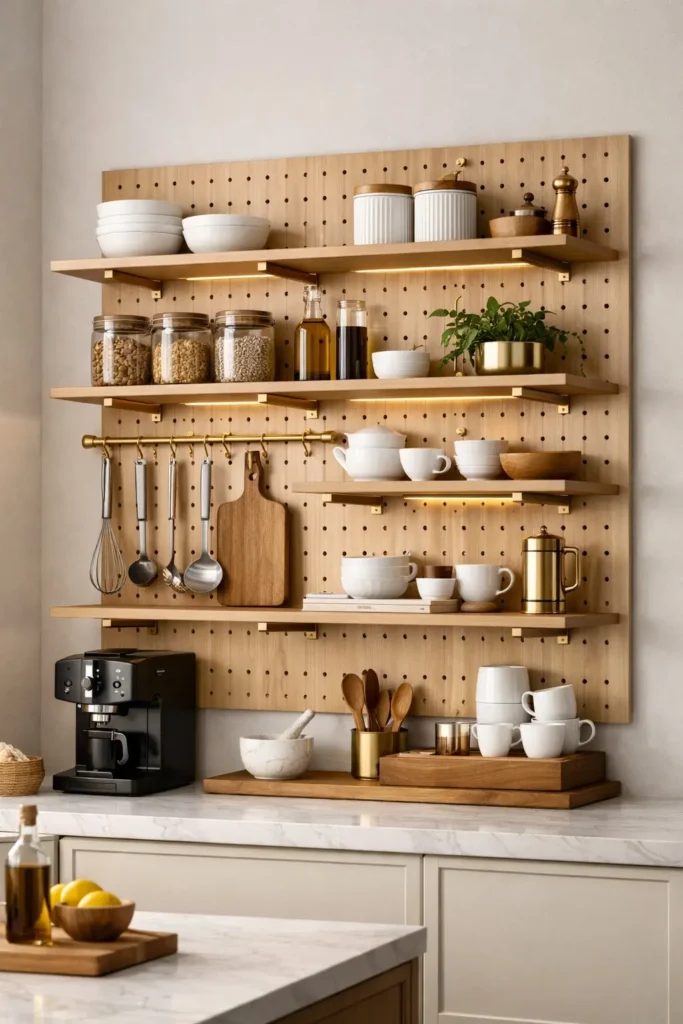
16. Hanging Rod with S-Hooks
Simple rods suspend from walls. S-hooks hang pots, pans, and utensils. This solution costs under $50 to install. Maximum weight depends on rod quality. Visual clutter increases with more items. Kitchens need adequate wall space. This works well for frequently used tools.
Perfect for:
- Hanging cookware and utensils.
- Budget-friendly solutions.
- Frequently used item access.
- Contemporary kitchen styling.
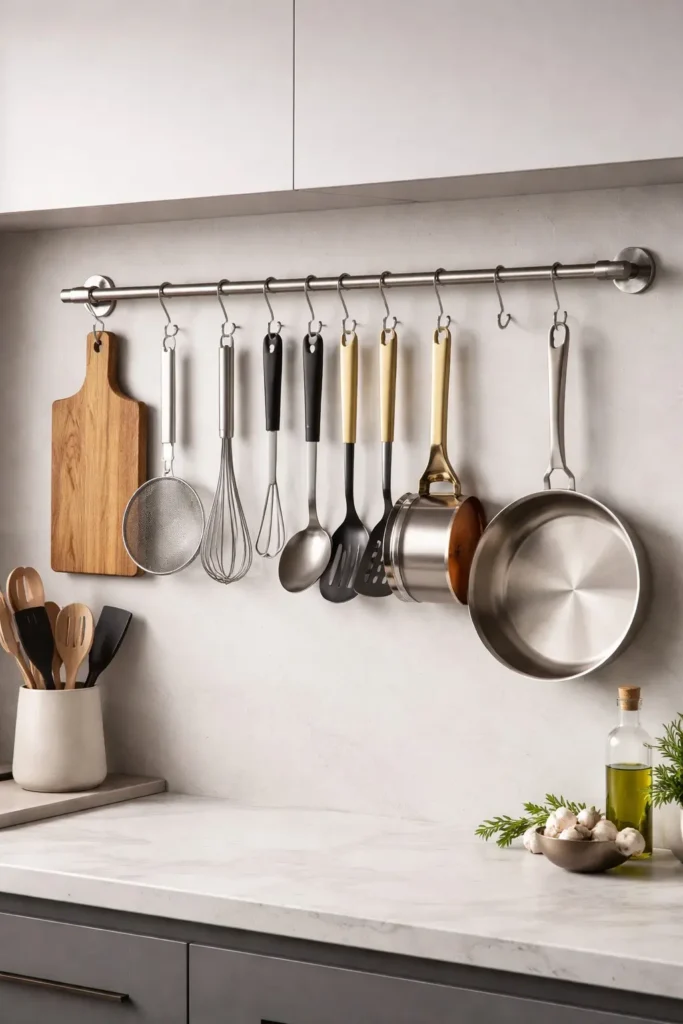
17. Ceiling-Mounted Track Systems
Tracks run along kitchen ceilings. Hooks and shelves slide along tracks. This provides maximum flexibility and movement. Installation requires ceiling assessment. Weight capacity varies significantly. Professional installation ensures safety. This suits open kitchen layouts.
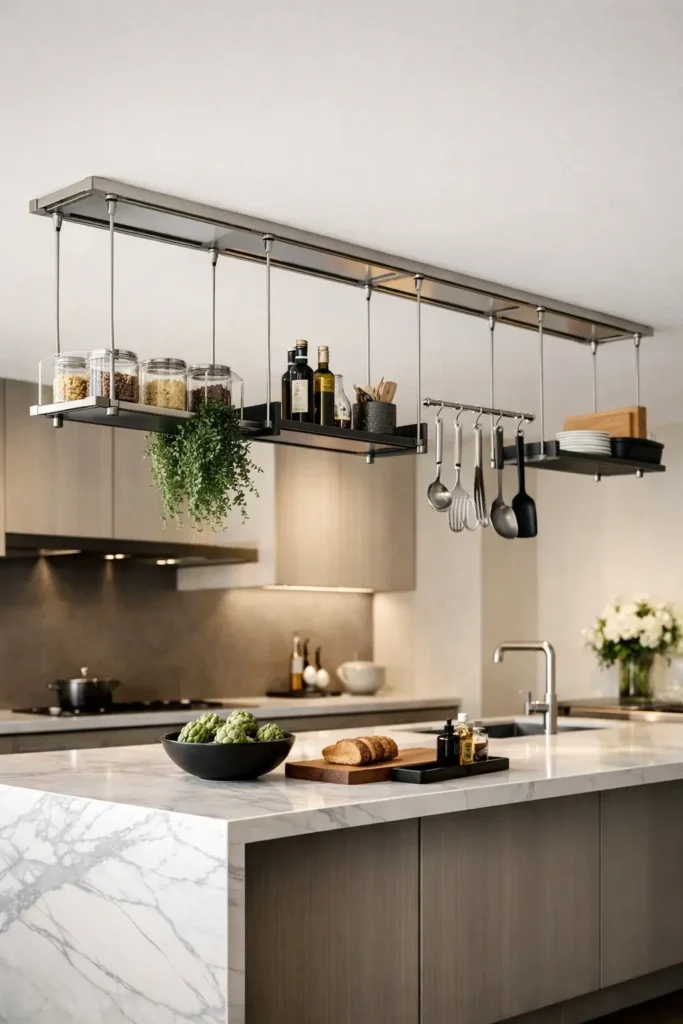
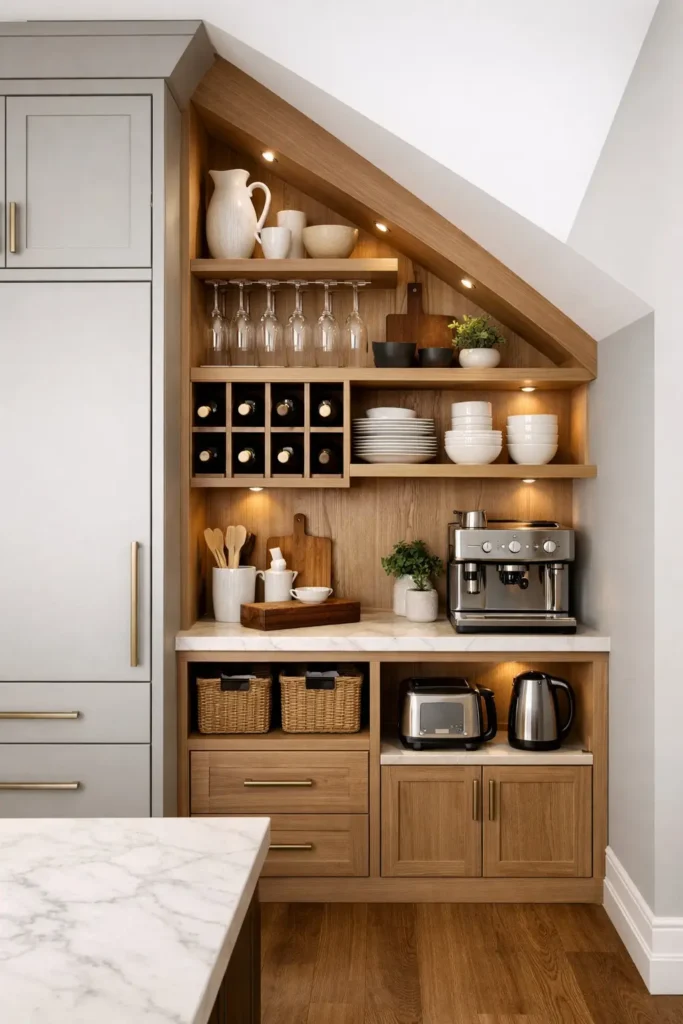
18. Nook and Cranny Shelving
Awkward spaces become useful storage. Custom shelving fits odd spaces perfectly. Wasted footage becomes functional. Measurement precision prevents errors. This requires professional carpentry often. The result maximizes available space. No wasted corners or niches.
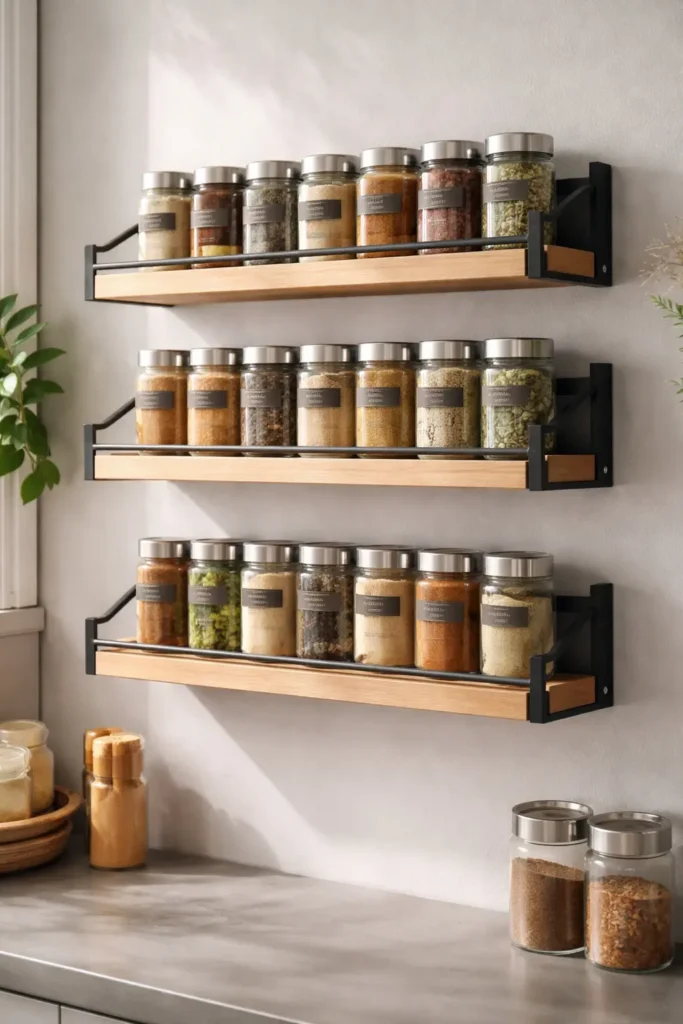
19. Spice Rack Wall Shelves
Narrow shelves hold spice jars specifically. Angled designs prevent jar sliding. Spices stay organized and visible. Measurements accommodate standard jar sizes. Light wood complements modern kitchens. Metal frames suit industrial spaces. This solves common spice chaos.
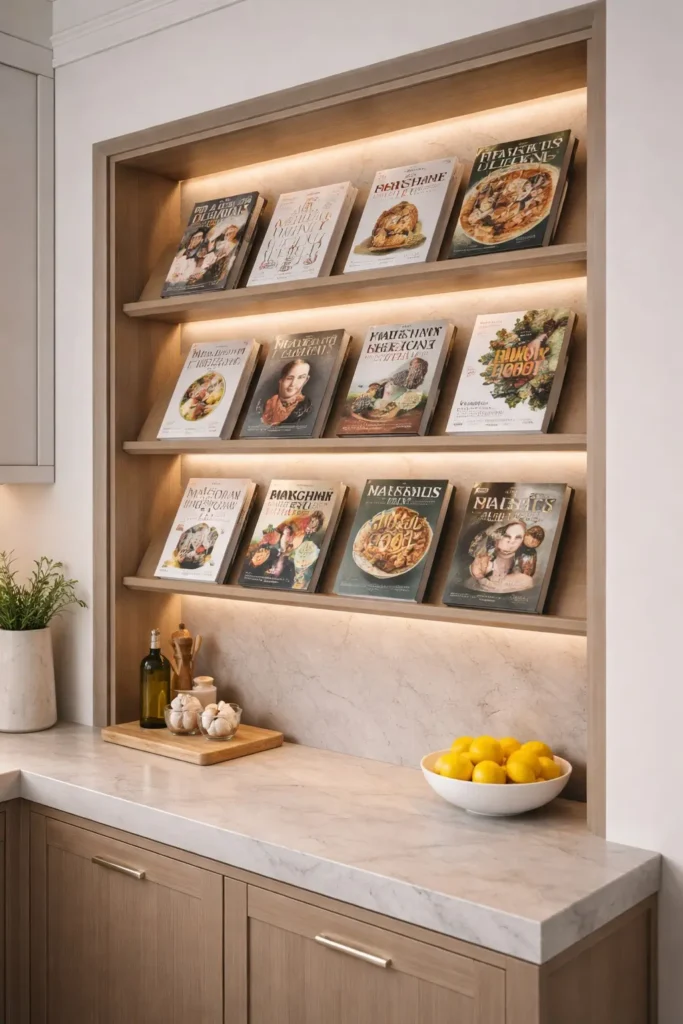
20. Cookbook Display Shelving
Angled shelves display cookbooks like artwork. Books lean at optimal viewing angles. This adds kitchen personality. Cookbooks become décor elements. Organization becomes visual and functional. Dust settles less on angled surfaces. This celebrates your cooking library.
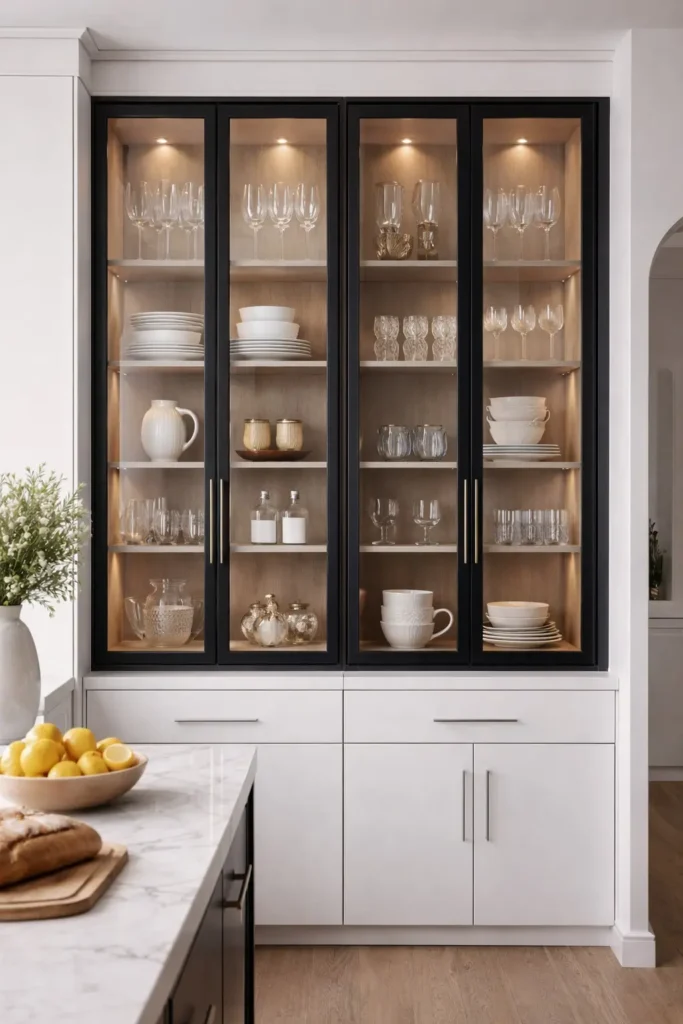
21. Glass-Door Cabinet Shelving
Shelves with glass-front doors protect items. Dust stays off displayed dishware. See items without opening doors. Traditional or modern door styles exist. Weight capacity fully supports glassware. This balances open and closed storage. Hybrid approach solves multiple problems.
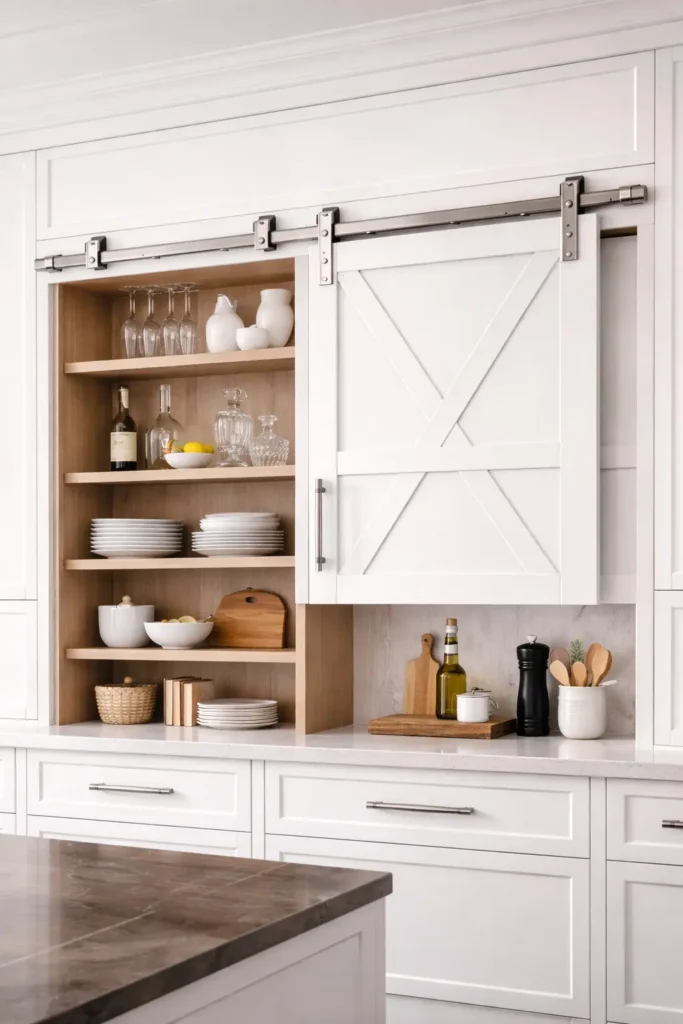
22. Barn Door Shelving Units
Barn door style adds rustic charm. Doors slide horizontally covering shelves. Hidden storage appears uncluttered. Mechanical operation requires maintenance. This suits farmhouse and transitional styles. The statement-making design impresses guests. Hybrid open-closed storage works perfectly.
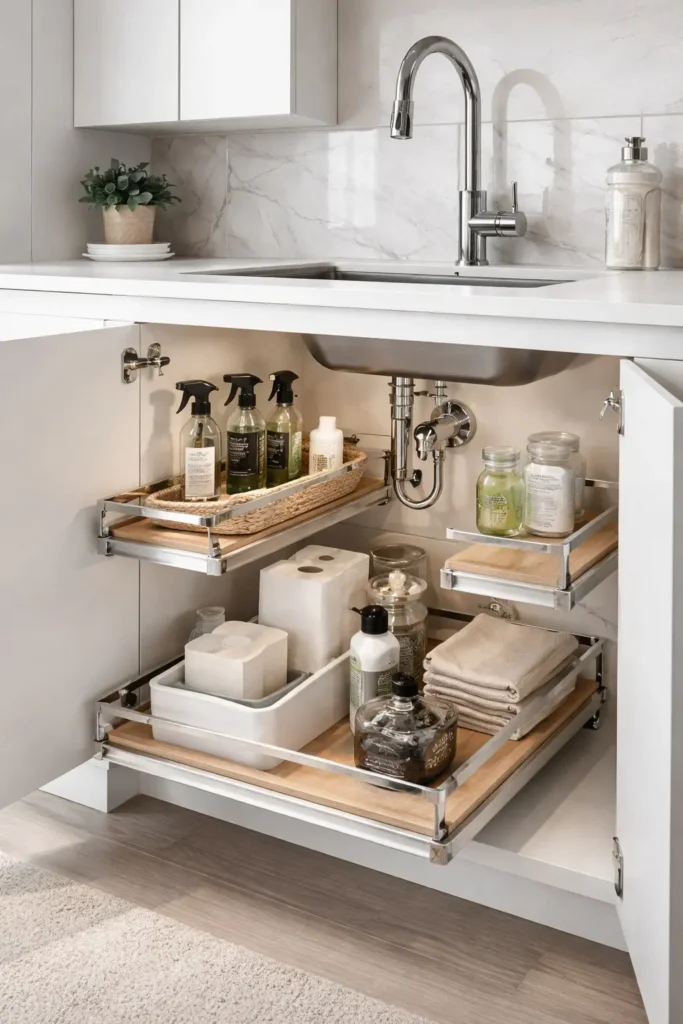
23. Under-Sink Pull-Out Shelving
Shelves beneath sinks become functional. Sliding mechanism brings items forward. Plumbing clearance requires careful planning. Custom-cut shelves fit around pipes. This reclaims difficult storage spaces. Accessibility improves significantly. Previously wasted space becomes valuable.
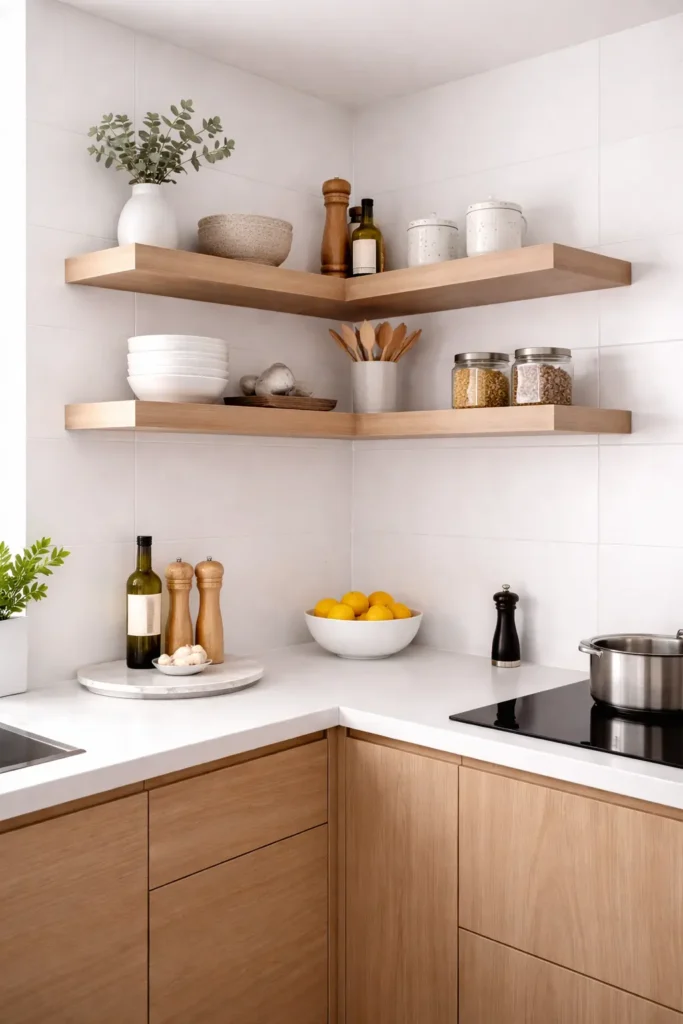
24. Floating Corner Shelves
Corners mount shelves without hardware showing. L-shaped floating shelves save space. Two walls gain simultaneous storage. Minimalist appearance suits modern kitchens. Installation hides all brackets behind walls. This creates seamless corner solutions. Maximum visual impact with minimum bulk.
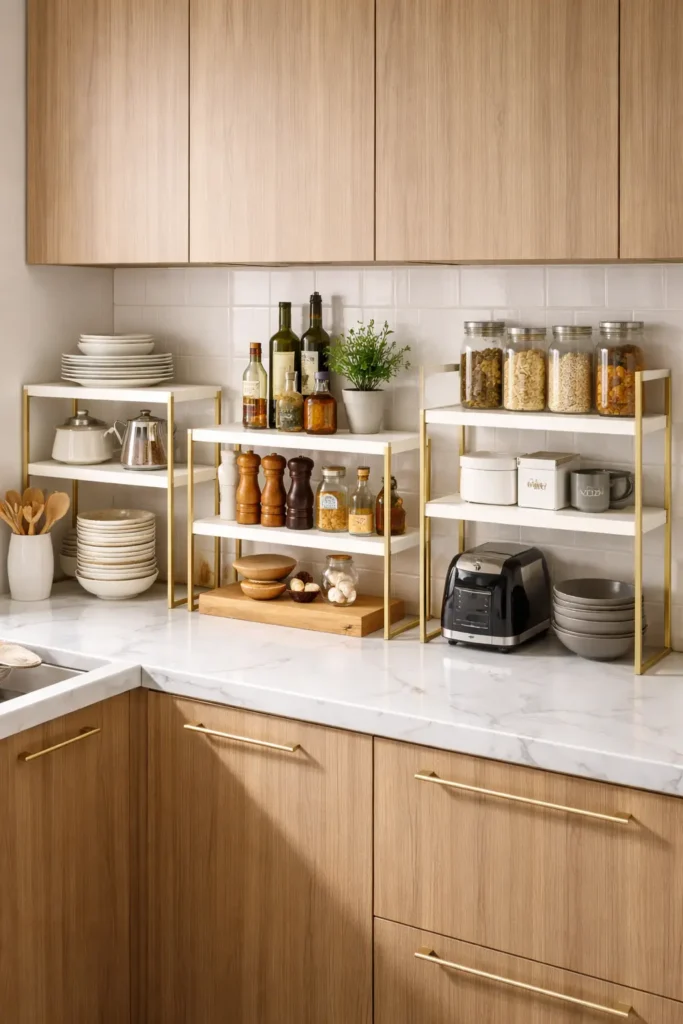
25. Three-Tier Shelf Risers
Desktop risers create additional shelf space. Shelves stack above counter items. Vertical organization increases capacity. This works in limited kitchens. No installation required for placement. Easy removal allows future changes. Budget-friendly space multiplication occurs.
26. Herb and Spice Vertical Gardens
Narrow shelves mount vertically near windows. Herbs grow in small pots on shelves. Fresh herbs stay immediately accessible. Sunlight requirements limit placement. Growing fresh herbs improves cooking quality. This combines storage with food production. Practical and beautiful solution merges.
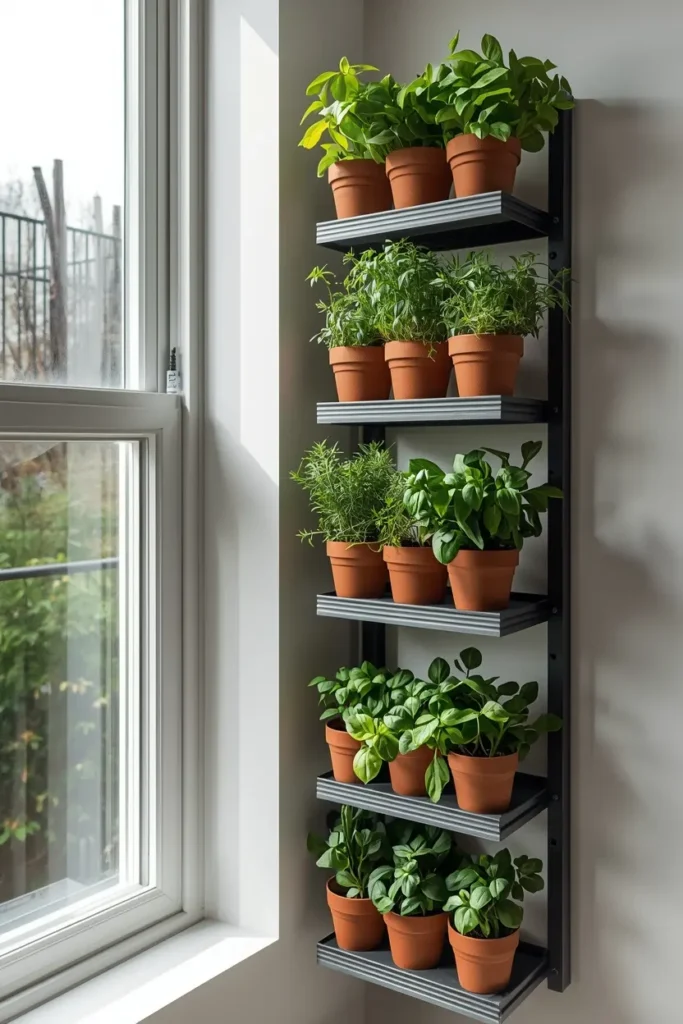
27. Staggered Height Display Shelves
Different shelf heights create visual interest. Varied heights accommodate different items. Asymmetrical arrangement looks collected and curated. This prevents monotonous straight-line appearance. Professional styling looks intentional. Gallery-wall shelving inspires creativity.
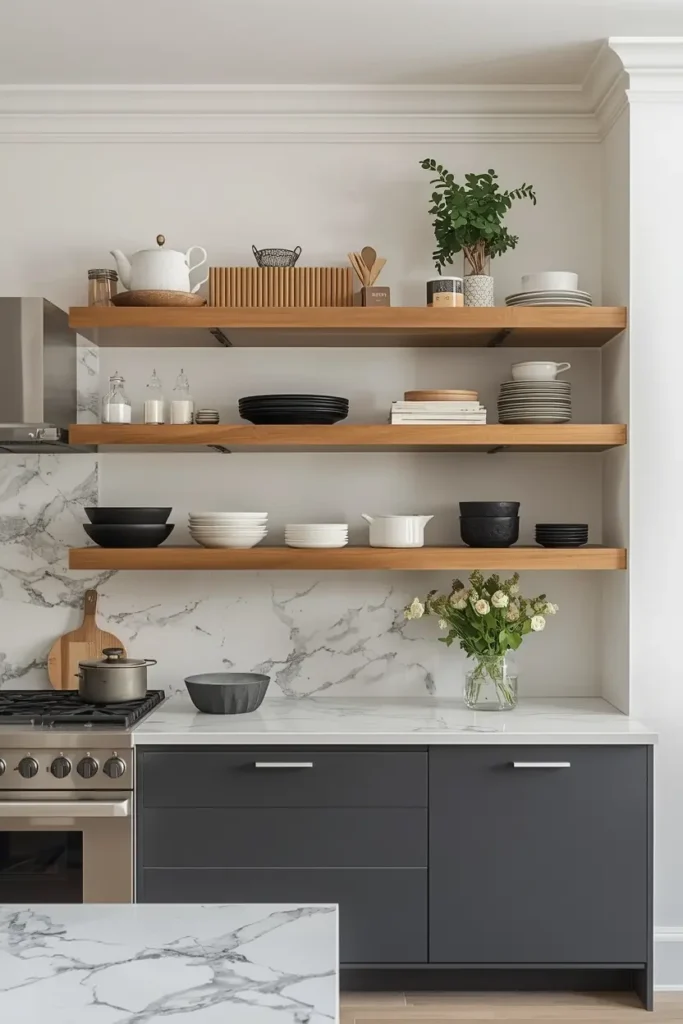
28. Restaurant-Style Open Shelving
Commercial kitchen aesthetics suit home spaces. These shelves handle heavy daily use. Open designs display cookware beautifully. Stainless steel construction lasts decades. Professional appearance elevates kitchen feel. This works for serious home cooks. The investment reflects commitment to cooking.
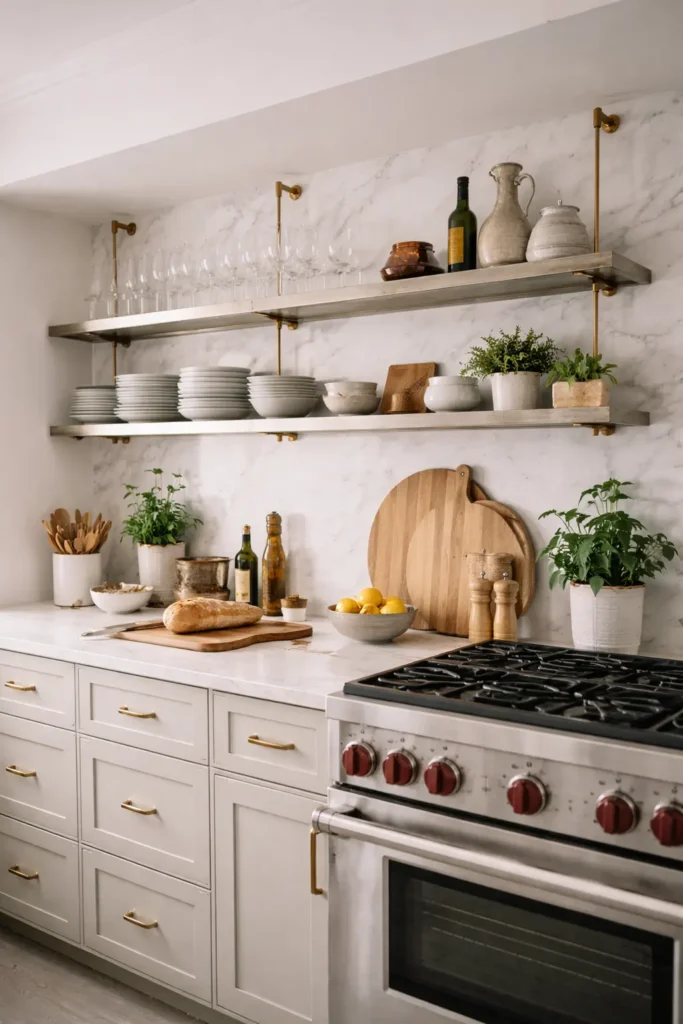
29. Suspended Shelf Cables
Cables attach shelves from ceilings. Minimal visible support creates drama. This suits modern and industrial spaces. Weight capacity depends on cable quality. Installation requires ceiling strength assessment. The striking visual impact justifies extra planning. Unique appearance distinguishes your kitchen.
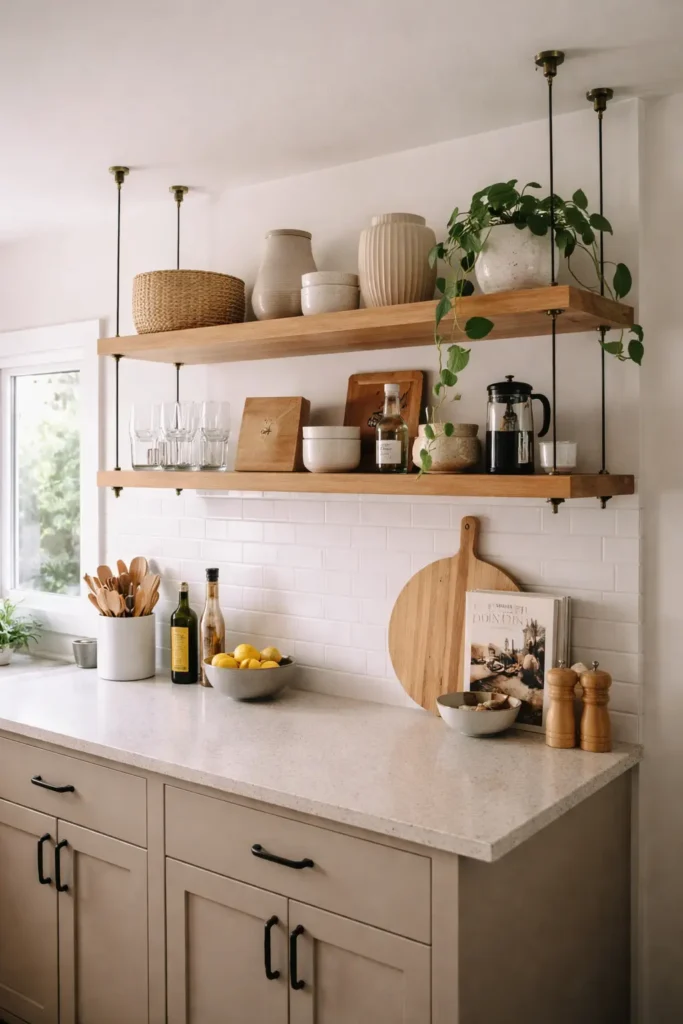
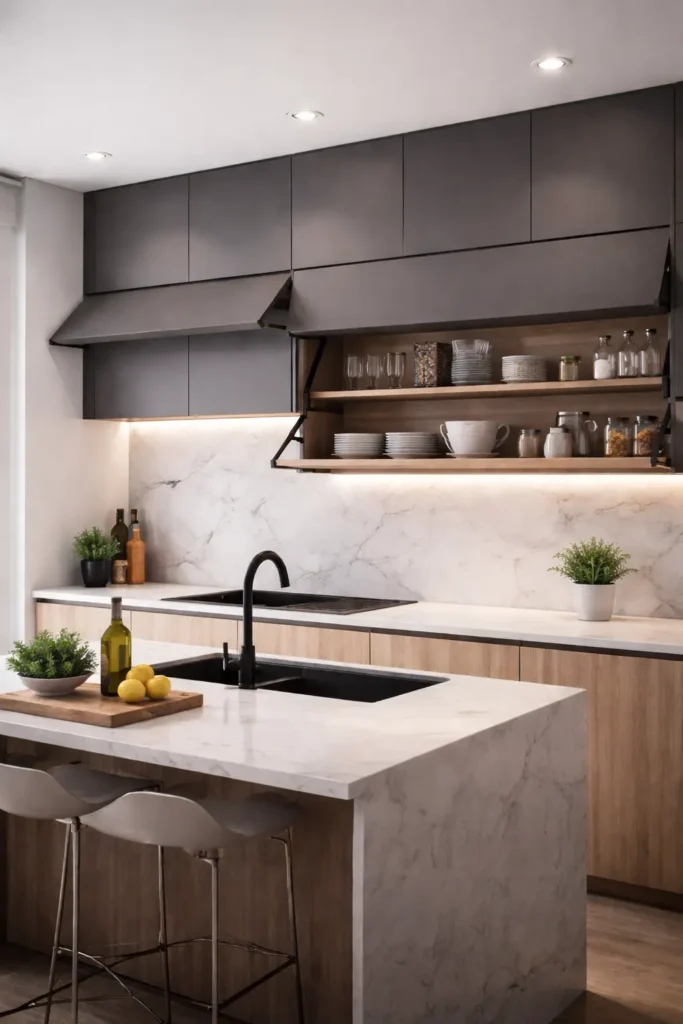
30. Fold-Down Shelving
Shelves fold up when not in use. Space savings benefit small kitchens. Hidden items reduce visual clutter. Mechanical hinges require sturdy quality. This works for occasional-use storage. Transformation from closed to open occurs instantly. Murphy-style storage increases flexibility.
Choosing Your Kitchen Shelving
Measure your walls accurately first. Consider weight requirements for items. Think about daily access frequency. Match shelving style to kitchen décor. Plan for future growth and changes. Budget appropriately for quality installation. The best shelving works with your actual habits. Test before permanently installing. Small changes prevent large regrets later.
Conclusion
Kitchen shelving directly affects daily function and enjoyment. These 30 options offer solutions for every situation. Your choice depends on space, style, and needs. Quality installation matters for safety and longevity. The right shelving simplifies kitchen life. Invest time in planning your solution. Your future self will appreciate the organization.